September 16, 2026 · 6 min
Sewer line repair cost: why the word repair makes every range meaningless
Every published sewer repair cost range averages five different jobs into one number. The honest answer starts by naming the job you actually need.
What does sewer line repair cost? The pages that answer with a range are doing something statistically indefensible: averaging a cleared blockage, a one-joint patch, a lined run, a burst-and-replaced line and a full excavation into a single figure. Those are different jobs by an order of magnitude. No number appears on this page, for the same reason no number appears anywhere on this site, and what follows is the structure of the honest answer instead. The structure is worth more than a figure, because it works on the quote already in your hand.
First variable: which job it actually is
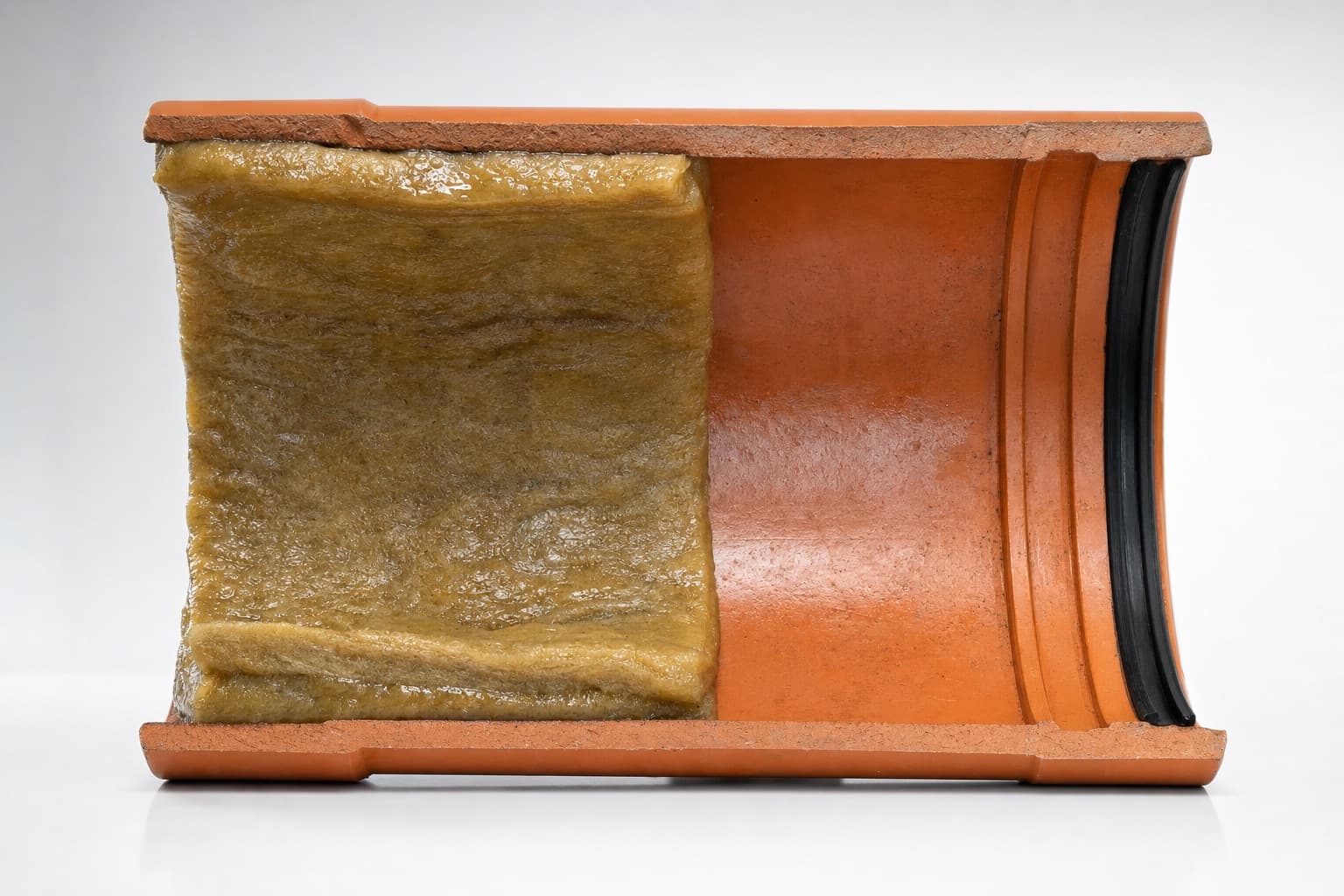
The word repair hides the biggest cost decision. Clearing a blockage, patching one defect, lining a run, bursting in a new pipe and digging a trench sit on a scale where each step can be a multiple of the last. Those are the five jobs the phrase hides. Before the camera has been down the line, nobody knows which step your pipe is on, which is why a price quoted over the phone is a guess about somebody else’s pipe. The camera converts that guess into a named job, and everything downstream of the naming is ordinary arithmetic. A blocked main is the clearest case: clearing it and repairing it are two separate jobs.
Second variable: how much of the line is involved
One joint or the whole run. A spot repair over a single root entry and a liner from the house to the main are priced on different logic, and the survey footage, with defects logged by distance, is the only document that says which your line needs. It also says the opposite thing when it needs saying: that one alarming defect sits on an otherwise sound pipe, and the proportionate fix is small. Between those two readings of the same pipe sits most of the spread that the published ranges flatten. For a full replacement, the figures that have been published, and who published them, are collected on sewer line replacement cost.
Third variable: everything around the pipe
Depth, access, what sits on the surface, how many laterals connect, whether the line can be taken out of service, and what the jurisdiction would likely require in permits and reinstatement. These are the variables that make two identical pipes cost differently, and they are covered in detail on the replacement cost article for excavation and the trenchless cost article for lining and bursting.
Why the published ranges are worse than nothing
A range built from completed jobs mostly measures which jobs were common in the data set. Applied to your line it anchors the negotiation: a fair quote for a hard job looks like gouging next to an average of easy ones, and a padded quote for an easy job looks reasonable next to an average that included excavations. Either way the range has cost you money before anyone has looked at the pipe. The longer version of this argument is on the calculator article.
The sequence that produces a real number
A camera survey with a written log. A named job: clear, patch, line, burst or dig, with the reason on the footage. A written scope listing access points, lateral count, cleaning method and what is excluded. Then a price. A quote built in that order does not move on site, and a quote built in any other order is a placeholder. Every element of that sequence is checkable, which is the point: an honest price is an argument, not an announcement.
How to use a quote you already have
Ask which of the five jobs it prices, and where the evidence is. Ask what is excluded, in writing, because reinstatement, bypass and permits live in the exclusions. Then hand the same footage to a second contractor and ask for the same scope. Two quotes against one set of facts is a comparison; two quotes against two guesses is a coin toss. If the first contractor resists handing over footage of your own pipe, that resistance is the most informative data point you will get.
Get a number attached to your pipe
A survey first, then a written scope. That is the only order in which a cost means anything.
CIPP Connect is an independent reference on buying pipe rehabilitation. It lines no pipe and holds no contractor licence. It explains what a survey has to show, which defects rule lining out, what a scope must specify, and what verification to demand on work you will never see with your own eyes.