September 11, 2026 · 7 min
Sewer line repair: one phrase, five different jobs
Fourteen thousand eight hundred searches a month use these three words, and they cover everything from a cleared blockage to a dug-up yard. Which of the five jobs yours is comes before any method and any number.
Sewer line repair is the plainest phrase in this trade and the least precise. It is searched 14,800 times a month, and behind it sit at least five different pieces of work with different crews, different timescales and wildly different bills. The first useful thing anyone can do with a failing line is establish which of the five is actually needed, and that is a diagnostic question rather than a shopping one. Averaging the five into one figure is why every published repair range misleads.
Job one: clearing, which is not a repair at all
A blocked line that flows again after jetting or cabling has been cleared, not repaired. If the blockage came from something that went down the drain, clearing may genuinely be the end of it. If it came from roots, a sagging section or a collapsing joint, the pipe that blocked is still there, and it will block again. The camera pass after clearing is what separates the two cases, and it is the cheapest insurance in this article. It also dates the problem: a log saying the line was sound in a given month is worth keeping, because the next blockage then starts from evidence instead of memory. What that pass can and cannot establish is on what a camera survey finds.
Job two: a spot repair on an otherwise sound line
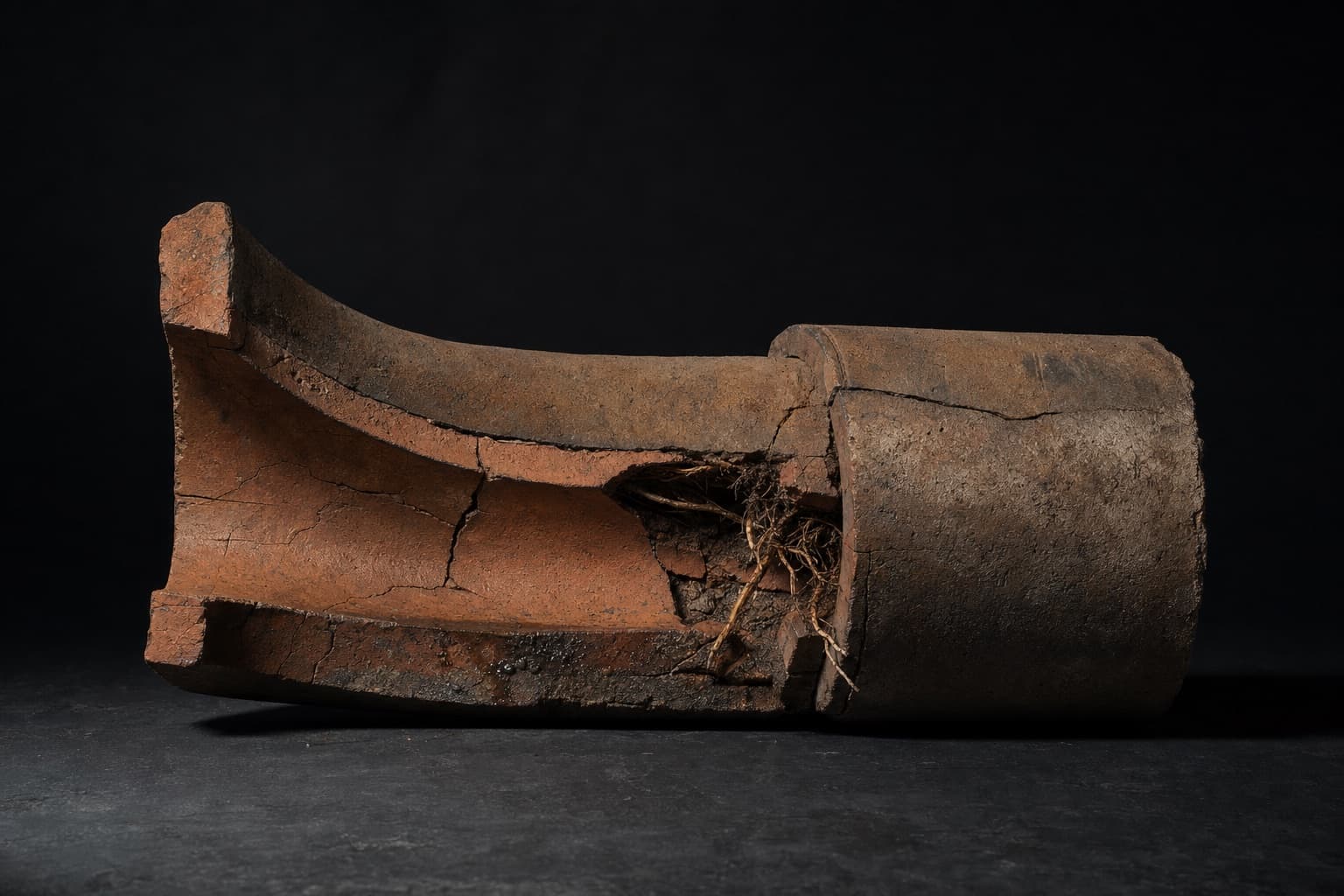
One bad joint, one crack, one root entry on a run the camera shows to be healthy either side. A short sectional liner from inside, or a small excavation over the defect, fixes it in proportion. The trap is the mirror image: a spot repair on a line with defects along its length is a subscription, because the next failure appears beside the patch. The footage decides which case you are in, and it does so for the price of reading it.
Job three: lining the whole run
Where the pipe is cracked, corroded or root-invaded along its length but still holds its shape, a cured-in-place liner forms a new pipe inside the old one from an access point, without opening the ground along the run. The stages, and the two where jobs go wrong, are on the lining page.
Job four: trenchless replacement
Pipe bursting pulls a fracturing head through the old line and tows a genuinely new pipe in behind it, from an entry pit to a receiving pit. Unlike lining it can keep or increase the diameter, and unlike excavation it leaves the surfaces along the run alone. The family of methods is compared on the methods article.
Job five: excavation, which is sometimes simply correct
A collapsed section has no bore left to work through. A line with a belly or a back pitch has a grade problem no liner corrects, because the liner follows the shape it is pressed against. A pipe that must move, or change size beyond what bursting allows, has to be dug. This site sells trenchless work and says plainly that digging wins a meaningful share of the time; the comparison is on lining versus replacement.
How the five jobs get confused
Almost always in one direction: the job sold matches the equipment on the van rather than the defect in the pipe. A drain cleaning firm clears what should be repaired. A lining firm lines what should be dug. Nobody needs to be dishonest for this to happen; it is enough that the diagnosis and the sale sit with the same person and the camera stays in its case. The cure is structural rather than moral: separate the diagnosis from the sale, and the confusion loses its engine.
The order that protects you
Survey first, with a recording and a written log you keep. Defect named, located by distance and depth. Then, and only then, a method, argued from the footage. What a proper survey contains is on inspection and assessment. A contractor who names the method before seeing inside the pipe has answered a question about their business, not about your line.
Find out which job yours is
A camera survey names the defect before anyone names a method. That order is the whole service.
CIPP Connect rehabilitates pipe in place: camera inspection and assessment, cleaning, cured-in-place liner installation, lateral reinstatement and post-installation verification. One crew, one written scope.