Lining or replacement: the comparison that is not about price per foot
Two quotes arrive: one to line the pipe, one to dig it up. They are rarely comparable as written, because they price different amounts of the same project. This page sets out what has to be added to each before the numbers mean anything.
The comparison everybody makes first, and why it misleads
The instinct is to divide each quote by the length of pipe and compare cost per foot. It is a clean number, it is easy to defend to a board or a spouse, and on this decision it is close to meaningless.
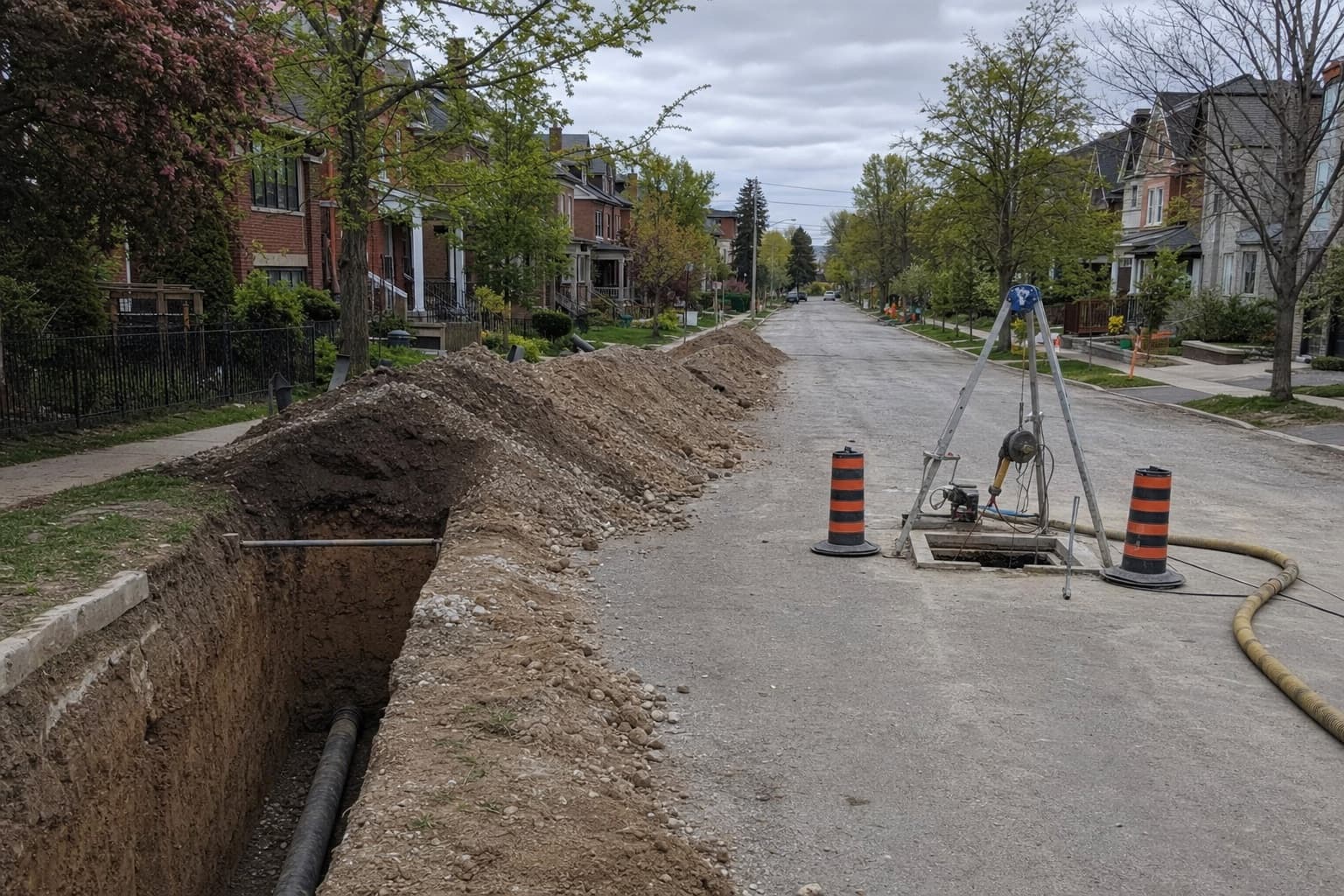
It misleads because the two methods do not include the same work. A lining price is largely a pipe price: survey, cleaning, liner, cure, reinstatement, testing. A replacement price is a construction price, and the pipe is one line in it. Everything that has to happen around the excavation belongs in the comparison, and none of it appears in a cost per foot.
What has to be added to a replacement quote
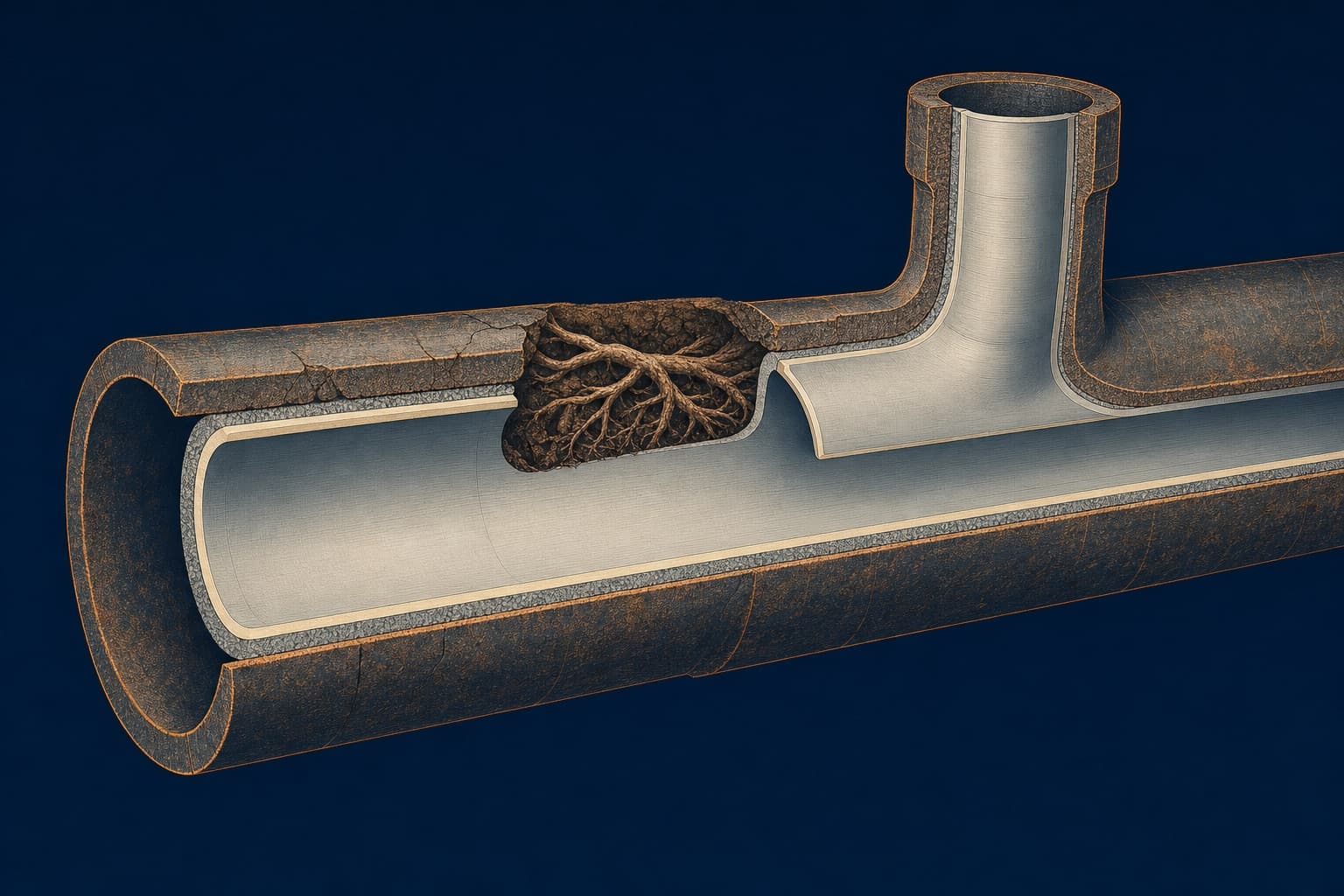
Some of these will already be included, some will be excluded, and some will not have been considered. Going through them item by item with the contractor is how a quote becomes a comparison.
- Excavation, shoring and spoil handling, which scale with depth far faster than with length.
- Dewatering, if the line sits below the water table.
- Traffic control, road plates and permits where the run is under a street or a parking area.
- Restoration: asphalt, concrete, curbs, sidewalk, irrigation, planting, and finished floor inside a building. This is regularly the largest single item, and it is the one most often left as an allowance.
- Downtime for whoever depends on the line, tenants, production, a kitchen, a ward.
- Making good the things that were not in anyone's scope: the fence that had to come out, the tree that did not survive, the tiled floor that no longer matches.
Under a building slab, a parking structure or a mature landscape, the restoration line alone can exceed the entire lining alternative. Under an unlandscaped side yard at shallow depth, it can be trivial, and there, replacement often wins outright.
What has to be added to a lining quote
The same discipline applies in the other direction. A lining quote can be quietly incomplete in four specific ways.
- Cleaning, priced as a fixed item or hedged as “if required”. On a scaled cast-iron line or a grease-laden commercial drain, that hedge is where the price moves.
- Bypass pumping and flow control, sometimes excluded entirely.
- The number of lateral reinstatements, which should be a count, not an assumption.
- Access excavation, where no usable manhole or cleanout exists.
Each of those is examined on what drives the cost. The point here is narrower: a lining quote that omits them is not cheaper than a replacement quote that includes its equivalents. It is less complete.
The four questions that settle it
Before any pricing, four findings from the survey decide whether this is even a choice. If any of the first three goes the wrong way, lining is not an option and the arbitration is over.
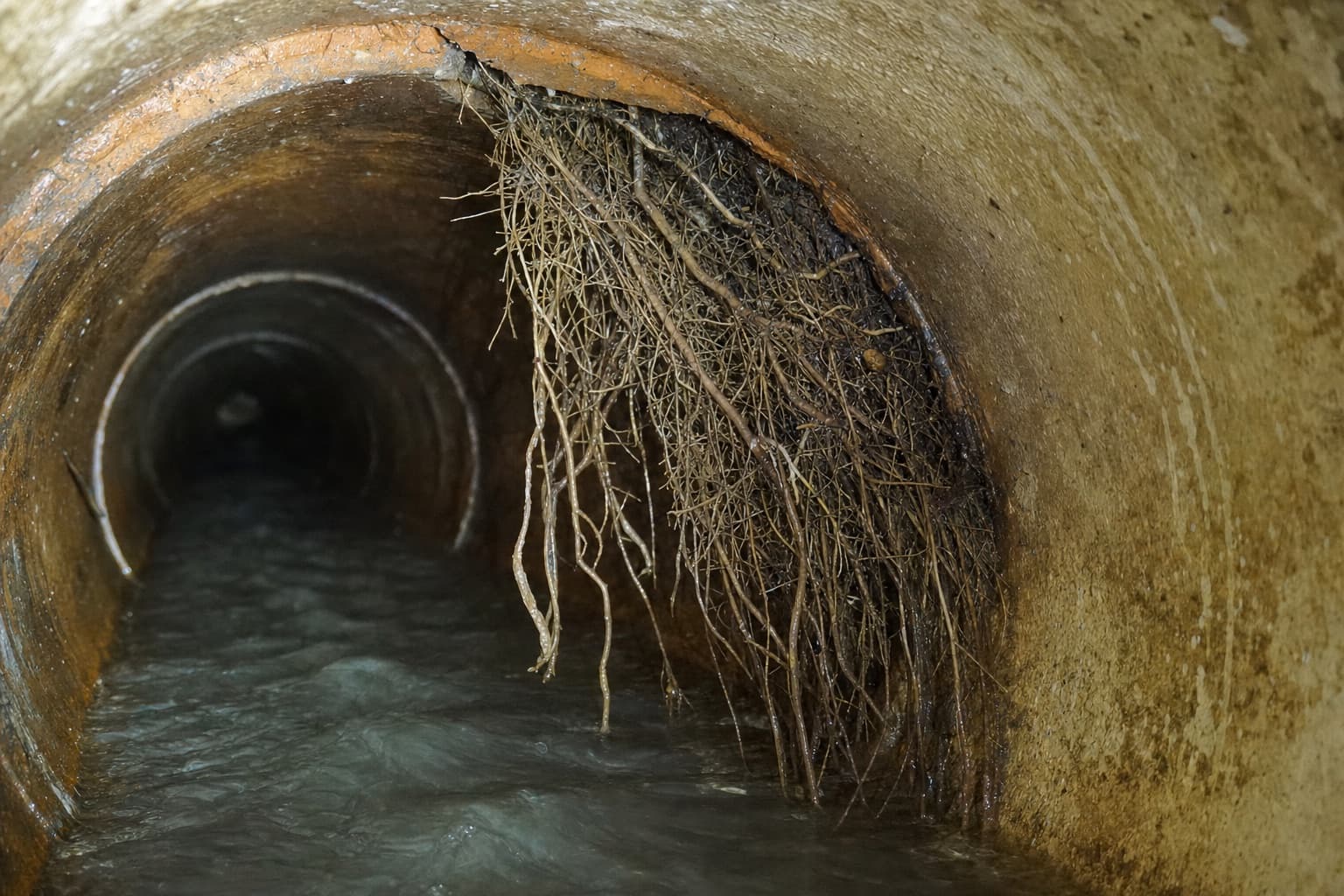
- Is the host pipe still intact enough to line against? A collapse or a missing section ends the discussion.
- Is the grade correct? A sag or reverse fall is a geometry problem, and geometry survives lining unchanged.
- Is the existing diameter sufficient for the flow it has to carry, now and for the life of the asset? If more capacity is needed, that points to replacement or to upsizing by bursting.
- Is there access at both ends? Without a usable manhole or cleanout, part of the trenchless advantage is spent on digging pits.
Where each method genuinely wins
Lining tends to win when
- The pipe runs under a slab, a road, a parking structure, a mature landscape or an occupied floor.
- The defects are distributed along the run rather than concentrated at one point.
- The line has to stay in service, or come back into service quickly.
- The disruption of an excavation would cost more than the pipe work itself.
Replacement tends to win when
- The pipe is collapsed, badly deformed, or missing over a length.
- The grade is wrong and needs to be re-laid.
- More capacity is required.
- The run is short, shallow and in open ground, where digging is simply the faster and more certain job.
- The pipe is at the end of a life that includes everything downstream of it, and a full rebuild is the plan anyway.
How to make the two bids comparable
One survey, shared with both bidders. The same defect list, the same lengths, the same lateral count. Where the surveys differ, the bids are not comparable, they are describing different pipes.
Then ask each bidder for the same three things: what is excluded, what is provisional, and what happens to the price if the cleaning stage finds something the survey did not. The third question is the one that separates a firm price from an opening position.
Frequently asked
Is lining a permanent repair or a temporary one?
A structurally designed liner is intended as a long-service solution rather than a stopgap, and liner systems are commonly specified against a fifty-year design life. A point repair over a single defect on a pipe with many is a different proposition, and should be recognized as such. [Design life figures to be sourced from product documentation before publication.]
Does lining affect the value or insurability of a property?
That is a question for a surveyor, a lender and an insurer, and the answer varies by market and by policy. What helps in every case is documentation: a post-installation survey, the cure record and the warranty, kept with the building file.
Can part of a run be lined and part replaced?
Frequently, and on a long run it is often the right answer: line the lengths that qualify, dig the section with the sag or the collapse. A bidder who proposes only one method for the whole run may not have read the survey closely.
Last reviewed July 29, 2026.
Related pages
- What drives the costUnderstand a quote and compare bids that do not look alike.
- CIPP pipe liningUnderstand the method itself and its conditions of use.
- Trenchless repairPlace lining among the alternatives instead of assuming it is the answer.
- Inspection and assessmentKnow what to require from a survey, and how to read the report.
Have both options scoped from the same survey
The comparison only works when both bidders price the same pipe. Describe the line and get it scoped once, properly.
CIPP Connect rehabilitates pipe in place: camera inspection and assessment, cleaning, cured-in-place liner installation, lateral reinstatement and post-installation verification. One crew, one written scope.