October 9, 2026 · 7 min
Pipe bursting repair: why the word repair is misleading, and what you are actually buying
Nothing is repaired. The old pipe is destroyed and a new one takes its place. That difference decides the warranty, the scope and what happens to every connection along the way.
Few pages answer this question properly, and the phrase itself contains a contradiction worth naming: bursting repairs nothing. It is a replacement method. Understanding that changes what you ask for and what you check.
Three things sold under one word
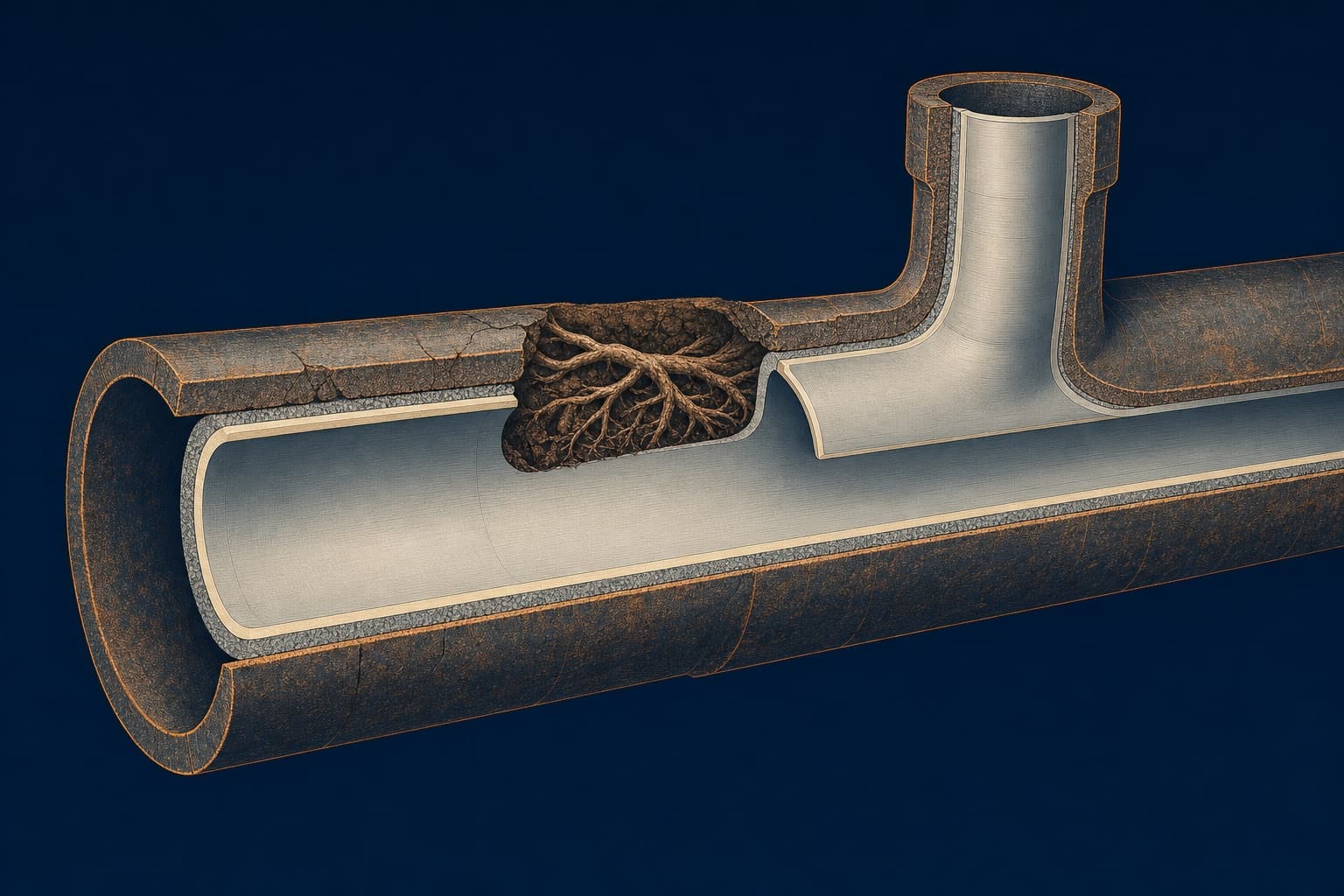
A repair fixes a defect and leaves the rest of the pipe alone: a spot repair, a patch, a short liner over one joint. A rehabilitation renews the whole length without removing it, which is lining. A replacement removes or destroys the old pipe and installs a new one, which is bursting or open-cut. The distinction is drawn across the whole category in one phrase, five jobs.
Why the distinction changes the warranty
A new pipe pulled into place carries the material warranty of that pipe and the workmanship warranty of the installer. A liner carries a warranty on the liner system. A spot repair usually carries the least of the three. When a proposal says “repair” but describes bursting, ask which of the three the warranty document actually covers, because the word on the quotation is not what governs. The wider choice between the two methods is in lining versus bursting.
The connections are the hard part
Every branch joining the run has to be dealt with. In lining, connections are cut back open after the liner cures, and whether that is included is a known place for a scope to be silent. In bursting, a branch joining the burst length has to be excavated and reconnected, because the old junction is destroyed along with the pipe. Counting the branches before quoting is not optional, and a quotation that does not mention them has not counted them. On a single-family lateral there is often only one, and the point barely arises. On a commercial run, or a lateral serving a converted building with several bathrooms added over the years, the branch count is the difference between one pit and five, and nobody discovers that with a shovel.
What gets left in the ground
The old pipe is not removed. It is fractured outward and stays in the soil around the new one. That is normal and it is how the method works, but it is worth knowing if the pipe material matters to you, or if the site has records requirements about what remains buried. It also has a practical consequence for the future: a line that has already been burst once is a different proposition the next time somebody wants to work on that corridor, and the as-built record of what was done and where should be part of what you are handed at the end. How the method works, and when it is the right one, is in what pipe bursting is.
Reinstatement, the line people forget
Two pits have to be backfilled, compacted and made good, and what was on the surface has to be put back. Driveway, path, planting, a section of road with a permit attached: all of it is part of the job and none of it is inspection or installation. It belongs on the quotation as its own line, included or explicitly excluded. Where a pit falls in the public right of way, the permit and the highway authority’s own reinstatement standard apply, and those are usually stricter and slower than anything happening on private ground.
What to ask before you sign
Which of the three jobs is being sold, how many branch connections are on the run and how each is handled, where the pits go and who reinstates them, what the new pipe material and diameter will be, and what post-work verification you receive. What a properly built quotation contains is set out in the article on quotations. How bursting sits among the other methods is on trenchless pipe repair.
Repair, rehabilitate or replace?
Three different jobs behind one enquiry. The survey decides which one your line needs.
CIPP Connect is an independent reference on buying pipe rehabilitation. It lines no pipe and holds no contractor licence. It explains what a survey has to show, which defects rule lining out, what a scope must specify, and what verification to demand on work you will never see with your own eyes.