August 21, 2026 · 6 min
CIPP lining cost: the five lines on the quote, and what each one buys
A lining quote is not one number, it is five pieces of work. Knowing what each line is for is how you compare two quotes that refuse to look alike.
Every honest lining quote is assembled from the same five pieces of work, whatever the layout of the paper. A quote that is one number with no anatomy is not cheaper, it is just unexamined. Here is what each line is buying, and which ones are trimmed to win jobs.
1. The survey everything else is priced from
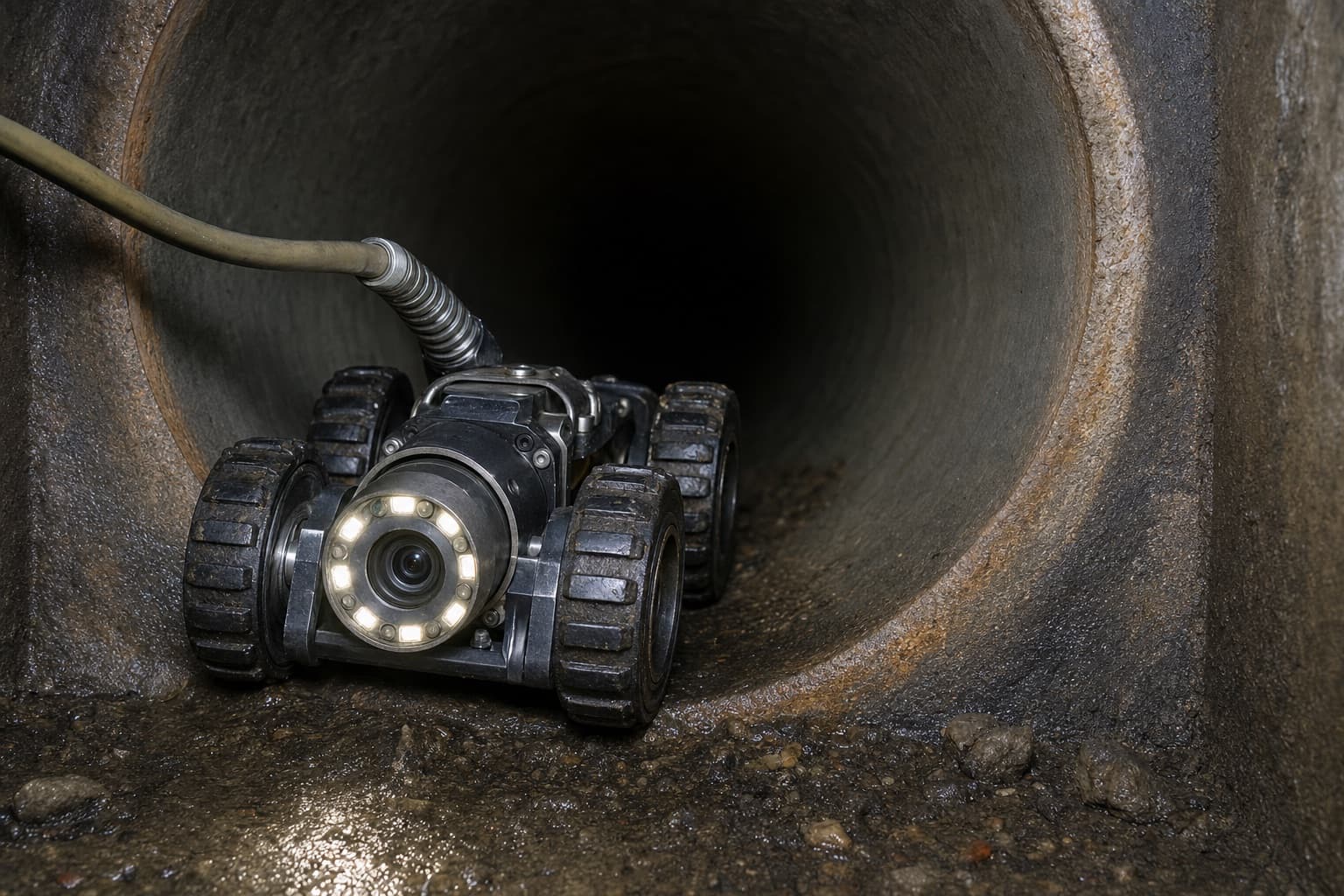
Camera footage of the full run, with the material, diameter, defects and every lateral recorded by distance. This is the cheapest line and the one carrying all the others: the liner is sized from it, the cleaning is scoped from it, the lateral count comes off it. A quote issued without one is a guess with a signature, and what a camera survey finds is what the signature rests on.
2. Cleaning, the line most worth paying for
The liner bonds to whatever the wall is covered with. Jetting, mechanical cutting of scale and roots where needed, then a post-cleaning survey to prove the wall is bare. On heavily scaled cast iron or a grease-loaded line this can be the largest line on the page. It is also the easiest to quietly shrink, because a liner over debris looks perfect on the completion video and fails privately, years later.
3. The liner itself, designed rather than bought
Cut to length, and specified in thickness for the diameter, the depth of cover, the loading above and the condition of the host pipe. Two liners for the same length of the same diameter can be legitimately different items, which is one reason two quotes differ. The calculation should be available on request, and how the whole process runs is on the stage-by-stage article.
4. Installation and cure
Inversion or pull-in-place, then hardening by hot water, steam or ultraviolet light, with a recorded temperature or exposure profile. The crew, the equipment and the hours are here, and so is the cure record, which matters more than the final video because an under-cured liner looks identical to a good one.
5. Reopening the branch connections
The liner seals over every lateral, and each one is cut back open from inside with a robotic cutter at the distance recorded in the survey. This line scales with the lateral count, which is why a house with one connection and a building with twelve are different jobs on identical pipe.
What sits outside the five lines
An access pit where no manhole or cleanout exists. Bypass pumping where the line cannot rest for the duration. Permits, and right-of-way conditions where the run leaves the property. Ask what is excluded before comparing totals: the difference between two quotes usually lives in this paragraph, and the wider context is on the lining cost page.
When no lining quote is the right quote
A collapsed section has no host pipe to form against. A belly or a back-pitch keeps its grade under the smoothest liner. A severely ovalised pipe folds the liner instead of hosting it. In each of those cases the correct answer is excavation, and a supplier who quotes lining anyway is answering a different question than the one you asked. The questions that separate suppliers are on choosing a contractor, and none of them is about price.
Get a quote built line by line
Survey first, then a written scope with every one of these items named. A quote built that way does not move on site.
CIPP Connect rehabilitates pipe in place: camera inspection and assessment, cleaning, cured-in-place liner installation, lateral reinstatement and post-installation verification. One crew, one written scope.