September 7, 2026 · 6 min
What decides the cost of a sewer camera inspection
Access, length, cleaning and whether you are given a real report. Four variables, no figure, and the cheapest survey is frequently the one you pay for twice.
Seven hundred and twenty searches a month ask what a camera inspection of a sewer line costs. We will not publish a figure, for the reason this whole site exists: a number here becomes the anchor a real quote is judged against, and the quotes it would be judged against are not for the same piece of work. What follows is what actually moves it.
Access decides more than length
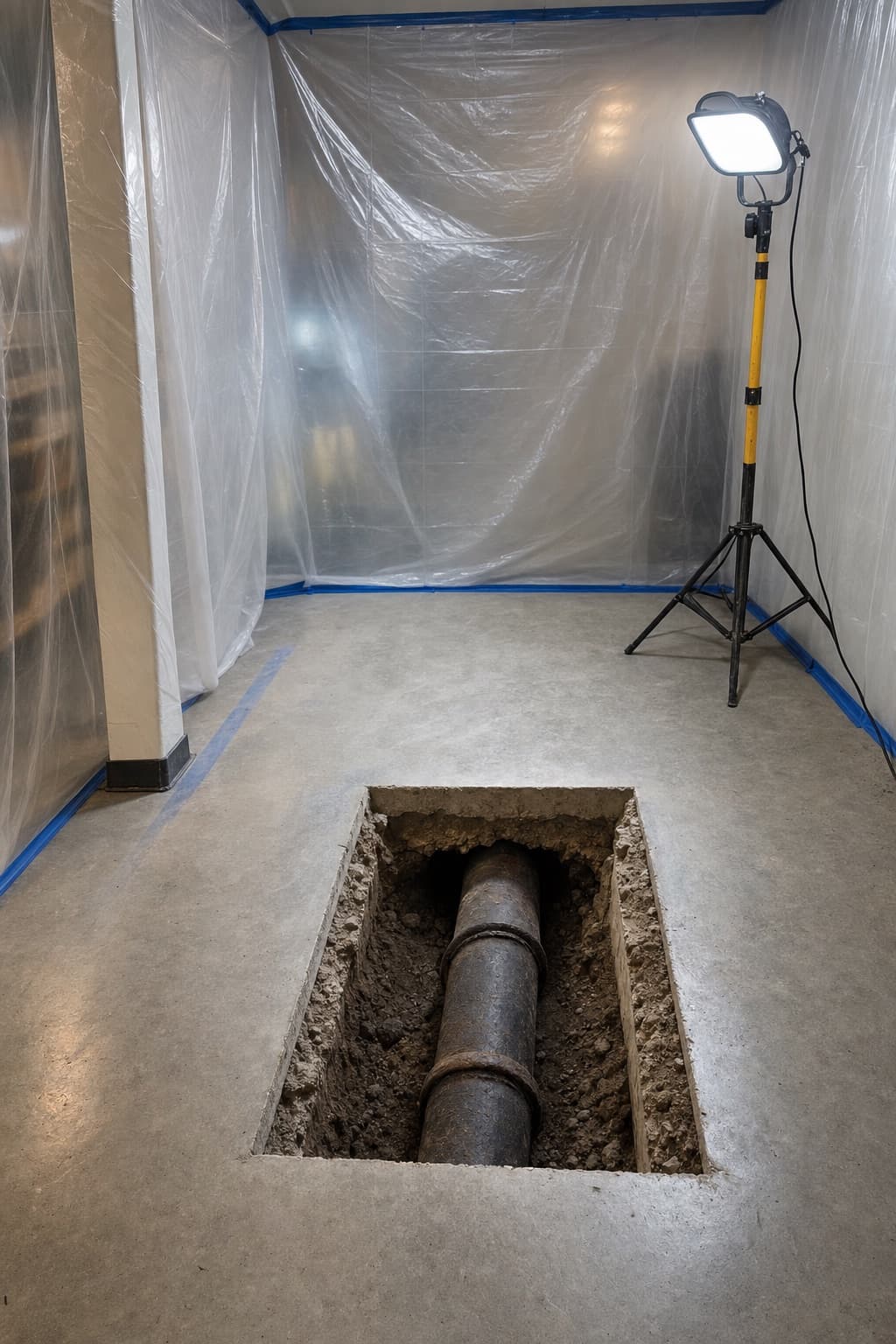
If there is an accessible cleanout, the camera goes in and the survey starts. If there is not, someone has to create access: pulling a toilet, opening a chamber, or in the commercial case cutting a slab to reach a line that was never given an access point. That is a different job before the camera has moved a foot, and it is the first thing to establish on the phone. The rest of what to settle before booking a survey belongs on the same call.
How much line, and what kind
A single house lateral from cleanout to main is a short run with a push camera. A commercial building with several stacks, a car park drainage system, or a municipal run between manholes is a crawler, more setup and more time. The equipment that suits the pipe is not a preference, and a quote priced for a lateral will not cover a main.
Whether the line has to be cleaned first
A camera cannot see through grease, scale or standing water. Where the line is dirty, a jetting pass comes before the survey, and that is separate work with its own cost. It is also not optional if the survey is to mean anything: a recording of the top half of a fouled pipe does not tell you what the pipe is doing. Cleaning is discussed in the article on how lining is installed, where it decides whether a liner bonds at all.
Whether locating is included
Marking a defect on the ground above, with a depth, means a sonde and a locator and somebody walking the surface while the camera holds position. It takes time and it is sometimes quoted separately. It is also the difference between a survey that identifies a problem and one that lets it be repaired without exploratory digging, so it is worth asking about before booking rather than discovering afterwards.
Whether you get a report or a conclusion
A written observation log with defects, severities and distances takes an hour or two to produce properly, and the price reflects that. A verbal summary costs nothing to produce and is worth roughly that when a second opinion is needed. Two survey prices that look different are frequently two different deliverables, and the cheaper one leaves you holding no evidence.
The free survey, and what pays for it
Free and heavily discounted inspections exist across this trade. The survey still costs somebody a van, a technician and two hours, so it is being paid for by the repair that is expected to follow it. That is not automatically dishonest, but it does mean the person deciding whether you need work is the person paid only if you do. The defence is the same as always: a recording you keep and a log you can show to somebody else.
What we would ask before agreeing a price
Is there a cleanout. How long is the run and what is it made of, if known. Is jetting included or extra. Is locating included. Do I receive the recording and a written log. Those five answers describe the job well enough for a price to mean something, and the rest of the decision is on the page about choosing a contractor.
Ask what is included before you book
Recording, written log, distances and located defects. If those four are in, the survey is worth having. Ask us in writing.
CIPP Connect rehabilitates pipe in place: camera inspection and assessment, cleaning, cured-in-place liner installation, lateral reinstatement and post-installation verification. One crew, one written scope.