September 28, 2026 · 6 min
Sewer line replacement and repair: who decides between them, and on what evidence
Repair a section, line the run, or replace the pipe: three answers, priced apart and sold by different trades. How the decision is made honestly, and why lining is often not the answer.
Sewer line replacement and repair is a small query, 140 searches a month, but it is the most expensive click in the September pull at $40.06, and the reason is in the wording. The person typing it has already been told two different things by two different trades and wants to know which is right. There are in fact three answers, not two: repair a section, line the run, or replace the pipe. This site sells the middle one, and the honest version of this article is that the middle one loses a meaningful share of the time. What follows is who should make the decision, and what evidence each answer requires.
Three answers, not two
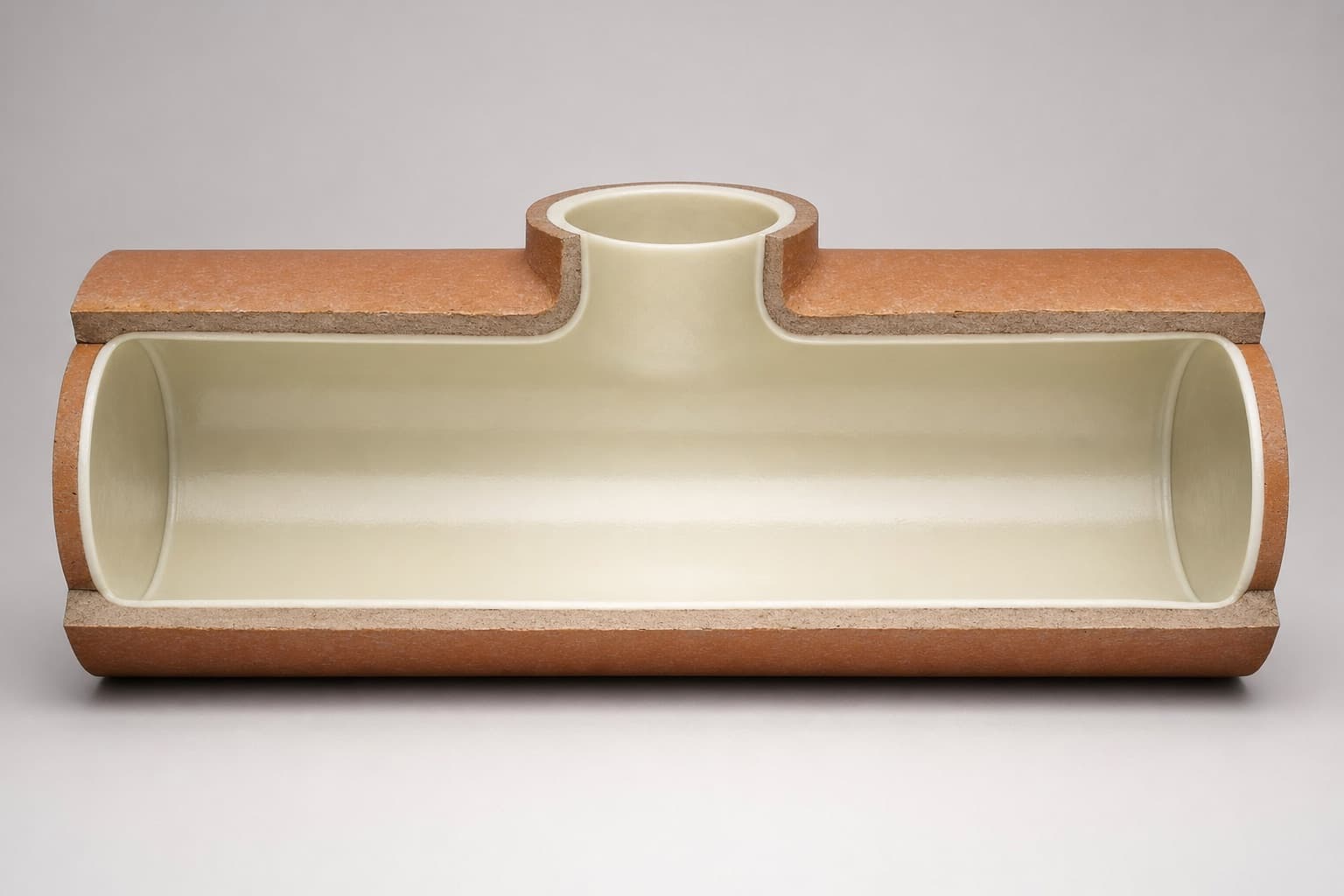
A sectional repair fixes one defect and leaves the rest of the pipe as it was. A liner forms a new pipe inside the old one along its whole length, following its shape. A replacement, by excavation or by bursting a new pipe through the old one, removes the old pipe from the equation entirely. Each is right for a different pipe, and each is wrong for the other two. The confusion comes from the word repair, which is used for all three by people who perform only one, a point made at length on the five jobs article.
Who decides: the footage, not the trade
The decision belongs to the person who owns the pipe, made on evidence the person selling the work did not have to interpret alone. In practice that means a camera survey with a recording and a written log, defects listed by distance and depth, before any method is named. A contractor can recommend, and should, but a recommendation is an argument from the footage, and it has to survive being shown to a competitor. If the diagnosis and the sale sit with the same person and the recording stays with the crew, the trade decides, and the trade decides in favour of its van.
The evidence for a sectional repair
One defect, clearly located, on a pipe the camera shows to be sound either side. A single root entry, one displaced joint, one crack. The rest of the run is the evidence, not the defect: if the pipe upstream and downstream is the same age and material and shows early versions of the same problem, a spot repair is the first instalment of a series. If it is genuinely clean, a spot repair is proportionate and everything else is overselling.
The evidence for lining, and the two things it needs
Defects along the length of the run, cracks, corrosion, root intrusion at many joints, on a pipe that still holds its shape and still drains to grade. Those last two conditions are the whole test. A liner takes the exact form of the host pipe, so a pipe that has sagged is lined into a sagging liner, which is why a belly is not a lining job. And a liner needs a bore to be installed through, so a collapsed section cannot be lined across. When both conditions hold, lining is often the right answer. When either fails, it is not, and no amount of preference changes that.
The evidence for replacement
A collapse. A belly or a back pitch, where the grade itself is the defect. A pipe too small for the building it now serves, because a liner reduces the diameter and only bursting or excavation can increase it. A line that has to move, or that crosses something it should not. And a pipe with so many defects, of so many kinds, that a liner would be asked to bridge more than it should. In each of these the old pipe is the problem, and keeping it, however neatly relined, keeps the problem. How the trenchless methods divide this territory between them is on the methods article.
The tie-breakers around the pipe
When the footage genuinely allows two answers, the ground decides. What is on the surface, how deep the pipe is, how many laterals join it, whether the line can be taken out of service, and what the jurisdiction would likely require in permits and reinstatement. A shallow run under grass may cost less to dig than to line; the same run under a driveway or a slab is the opposite. That comparison, with the cases where each side wins, is on lining versus replacement.
Writing the decision down
Whichever answer the evidence supports, the written scope should say which one it is, why, and what was ruled out. Repair, line or replace, with the footage timestamp that justifies it, the access points, the lateral count, and the exclusions. That document is what lets a second firm quote against the same facts, and it is what a future owner will ask for. A decision that exists only as a price is not a decision. It is a purchase, and the pipe has no say in it.
Ask us which of the three it is
Send us the footage you have, or let us make it. The recommendation comes back argued from the pipe, with what was ruled out.
CIPP Connect is an independent reference on buying pipe rehabilitation. It lines no pipe and holds no contractor licence. It explains what a survey has to show, which defects rule lining out, what a scope must specify, and what verification to demand on work you will never see with your own eyes.