October 14, 2026 · 7 min
Pipe bursting a sewer line: what replacing the whole run actually involves
The method quoted when a line is past lining. Two pits, a winch and a new pipe pulled along the old corridor, and a set of questions about everything sitting between the two ends.
This is the phrase people are given when a survey has ruled lining out and the contractor is still offering to avoid a full trench. It is a replacement, not a repair, and the distinction matters for what you are agreeing to. The method itself is described in the article on what bursting is; this one is about the shape of the job when the whole run is going.
What is being replaced, and what is not
A bursting head is pulled through the existing pipe, breaking it outward into the surrounding soil while a new pipe follows behind it on the same line. What you get at the end is a new pipe along the old corridor. What you do not get is a new route, a new gradient or a new connection point. If the problem with your line is where it runs or how it falls, replacing it along the same corridor does not address that, and it is worth asking the question directly before the pits are dug.
The two pits decide most of the job
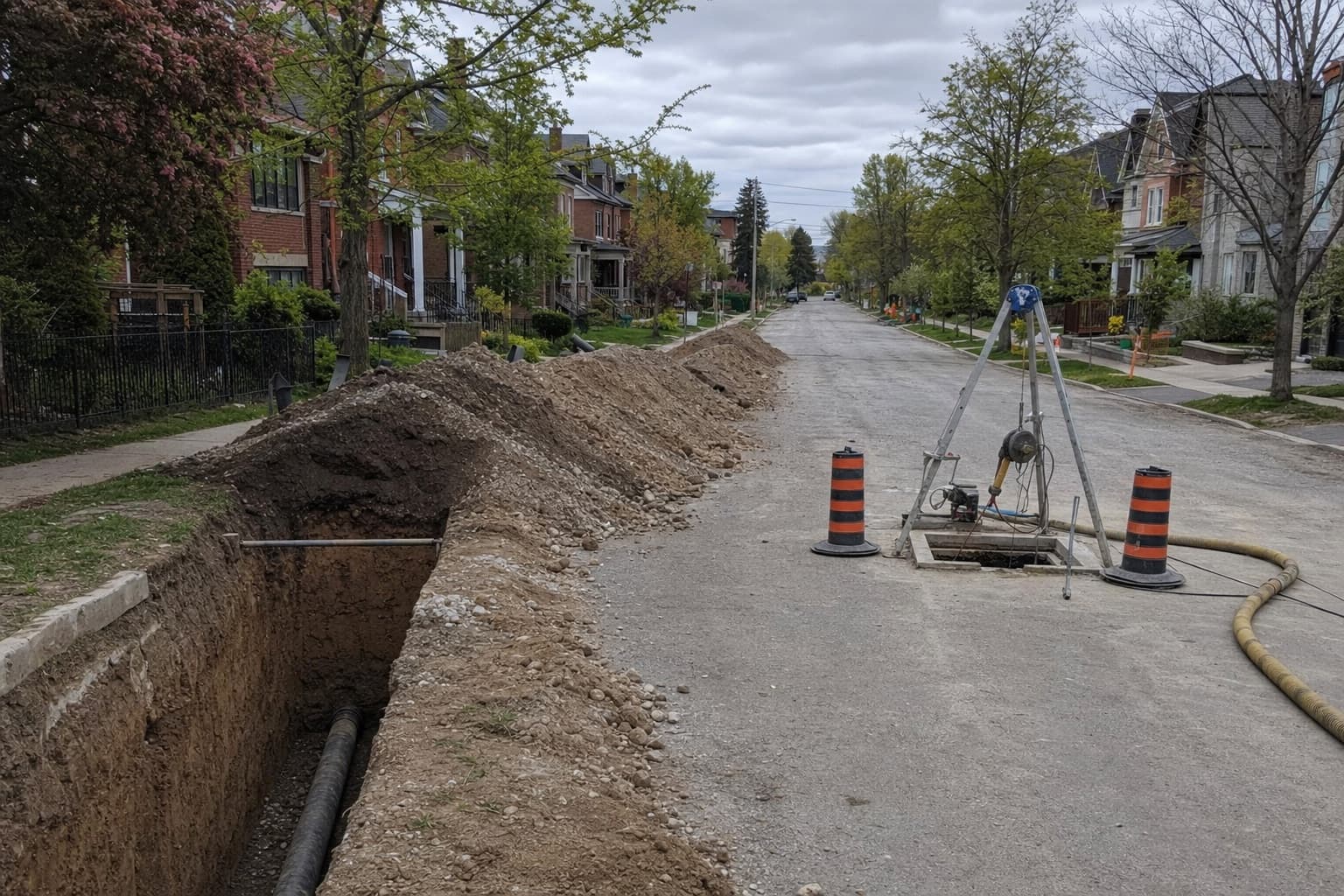
Bursting needs an entry pit and a receiving pit, one at each end of the run. Their positions are not negotiable in the way people expect: they are set by where the pipe ends, not by where it would be convenient to dig. A mature tree, a retaining wall, a garage slab, a neighbouring boundary or a road with a permit attached can each turn a straightforward run into a difficult one. Walk the line and look at both ends before the conversation, because the two places a pit has to go are frequently the two places an owner would least like one.
What the new pipe is, and why that is on the quotation
The replacement pipe is normally a fused continuous plastic pipe, pulled in as one length so there are no joints along the run for roots to find. The diameter can be kept or increased, and increasing it is only useful if whatever the line discharges into can take the extra. The material, the diameter and the jointing method belong on the quotation as written specifications rather than as a verbal assurance.
Branch connections are the part that gets forgotten
Anything joining the run between the two pits is severed when the old pipe is broken out. Each connection has to be excavated and remade, and each one is a small separate hole in the ground with its own reinstatement. A run with three branches on it is a different job from a run with none, at the same length. Count them on the survey and have each one listed. This is the single most common gap between a quoted price and a final invoice on this kind of work.
What has to be surveyed before anyone quotes
A camera run over the full length with distances recorded, the branch positions marked, and utility records for whatever else is buried alongside. Bursting displaces the old pipe outward, so services running close to the line are exposed to that displacement, and a congested corridor is a reason to look again at whether staying inside the existing pipe is possible. What a survey has to show is set out on the assessment page.
Where the method stops being available
A run that has already collapsed flat may not give the head a path to follow. A line under a structure, a line in a congested utility corridor, and a line whose ends cannot be reached without taking out something that must not come out are all reasons a contractor will decline. A refusal on any of those grounds is a good sign rather than a bad one. Where both bursting and lining are genuinely available, the comparison is set out in the article on choosing between them.
What to have in writing before you sign
The run length and both pit positions, the material and diameter of the new pipe, every branch connection and how each is remade, who reinstates each excavation and to what standard, and what verification you receive at the end. A post-work camera run is the only way to see work you will never see with your own eyes, and it should be yours to keep.
Have the run surveyed end to end first
A replacement scope written from footage names every branch connection and both pit positions. Ask for the recording with distances.
CIPP Connect is an independent reference on buying pipe rehabilitation. It lines no pipe and holds no contractor licence. It explains what a survey has to show, which defects rule lining out, what a scope must specify, and what verification to demand on work you will never see with your own eyes.